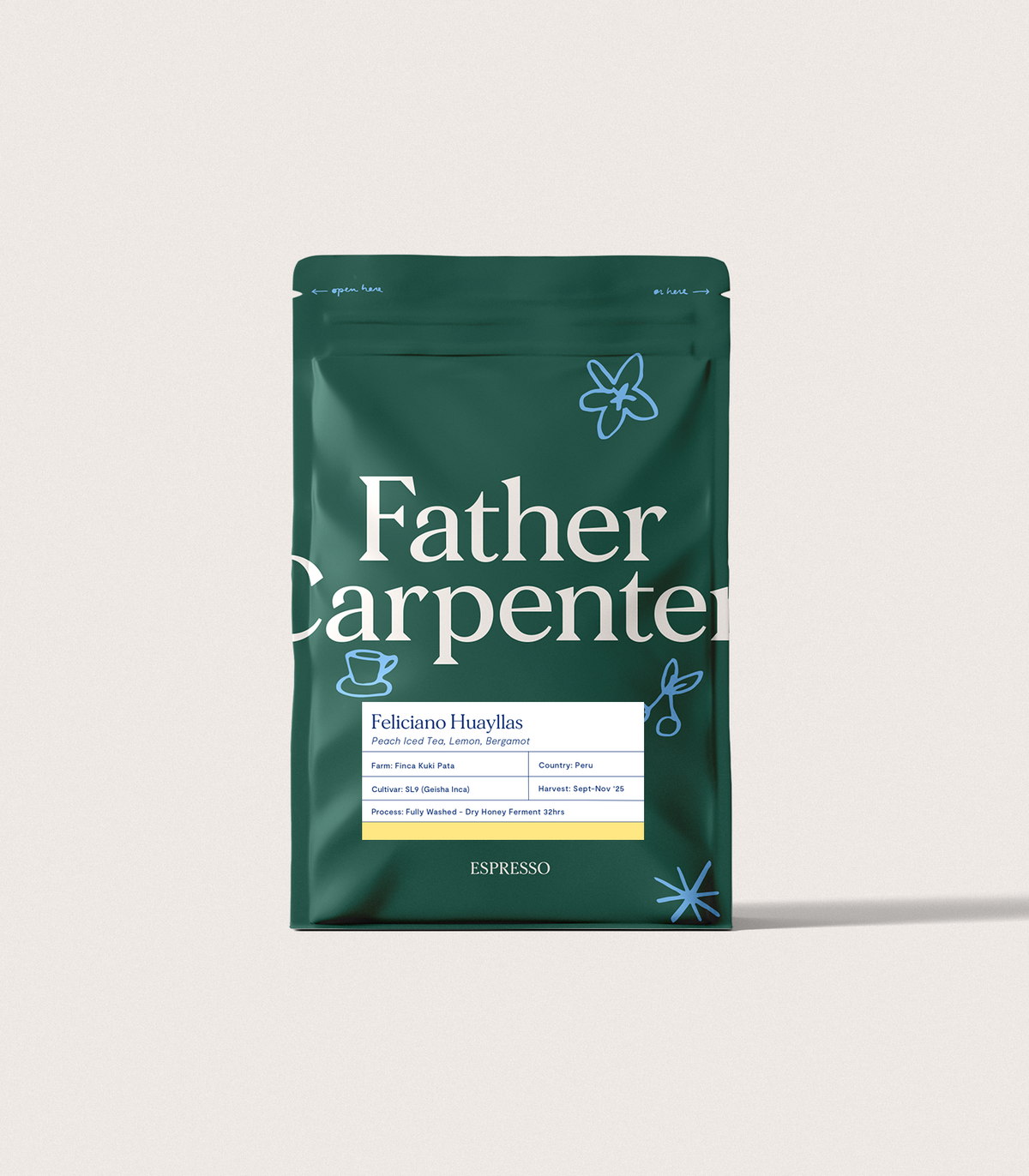
Feliciano Huayllas, SL9, Peru - Espresso
Feliciano Huayllas, SL9, Peru - Espresso
Couldn't load pickup availability
Feliciano Huayllas was one of the founding members of the Pacaybamba beneficio, which also became part of Incahuasi Cooperative. He was consistent in the traditional methods of farming passed down by the Incas, and adopted some processing methods taught by the cooperative.
With these methods combined his geisha took the 11th place in the Cup of Excellence 2021.
Flavour Notes: Peach Iced Tea, Lemon, Bergamot
Producer: Felliciano Huayllas
Located: Cusco
Varietal: SL9
Processing: Fully Washed
Harvest: September-November 2025
Processing
While the distinct dry season allows for some natural coffees to be produced, the majority of coffee from the Incahuasi Cooperative is fully washed. However, due to the region’s stable dry conditions and high altitude, a dry honey-style fermentation method is commonly used.
Fully ripened cherries are selectively picked and floated in water before pulping to remove unripe or insect-damaged fruit. After sorting, the cherries are pulped and transferred into clean fermentation tanks, where they ferment without added water in their own mucilage. The cool climate keeps the process stable, resulting in relatively short fermentation times of 24–32 hours. Dry fermentation also reduces the environmental impact associated with wastewater.
Following fermentation, the coffee is fully washed and moved onto raised drying beds. The parchment is turned evenly 5–6 times per day in the cool climate at approximately 2,000 meters above sea level. Drying at this altitude typically takes 10–12 days, reaching a stable moisture content of 10–11.5%.
Once drying is complete, the coffee is transported to the Incahuasi Cooperative headquarters in Andahuaylas, where it is tested and graded for quality. The storage facility sits above 2,800 meters, providing cool temperatures and stable humidity conditions ideal for preserving the coffee.
Farming
Among the producers of the Incahuasi Cooperative, agroforestry methods are widely shared and practiced. The cooperative provides agronomists who work directly in the field with farmers, offering guidance and support on organic composting and fertilization. These practices are carried out twice yearly to support both the flowering and ripening stages of the coffee cherry.
Weeding and pruning take place after the rainy season, from May to August. Due to the pronounced dry season during harvest, from September to December, irrigation is necessary and is supplied by the many springs and water sources created by the region’s mountainous terrain.
Many farmers separate their coffee plantations from other agricultural production, planting only shade trees among the coffee plants. These are primarily Indigenous species such as cedro, tarco, robel, and yanay, which help preserve the local ecosystem and maintain healthy insect populations.
Harvesting in the Incahuasi Valley is among the latest in Peru because of the region’s extremely high altitude and isolated climate in the south-west of Cusco. Ethiopian varieties begin harvesting in September, with the main harvest peaking in October. Higher-altitude farms typically peak in November, while the latest pickings continue through December.